Trejournal
Record trees where they stand, with position, photos and the measurements you need. Take the whole survey out as a report, a spreadsheet or a map file when you are done.
How it works
- You record in the field Work tree by tree, with the position from GPS — adjusted on the map where needed — photos, measurements and your own notes, and retention trees marked as left standing at harvest. The app works without coverage, so a survey at a woodland edge or behind a building goes as smoothly as one in town.
- The app keeps order Trees collect in the project they belong to. Each tree has its own map with its position, and a dated history of what was done and by which method. Search by species or reference number finds the tree again.
- You take it out Six ways out: a PDF per tree, a Word package per tree with text and images as separate files, an Excel file and a CSV with one row per record, GeoJSON that opens in any GIS tool, and a full backup that can be imported again.
Screenshots
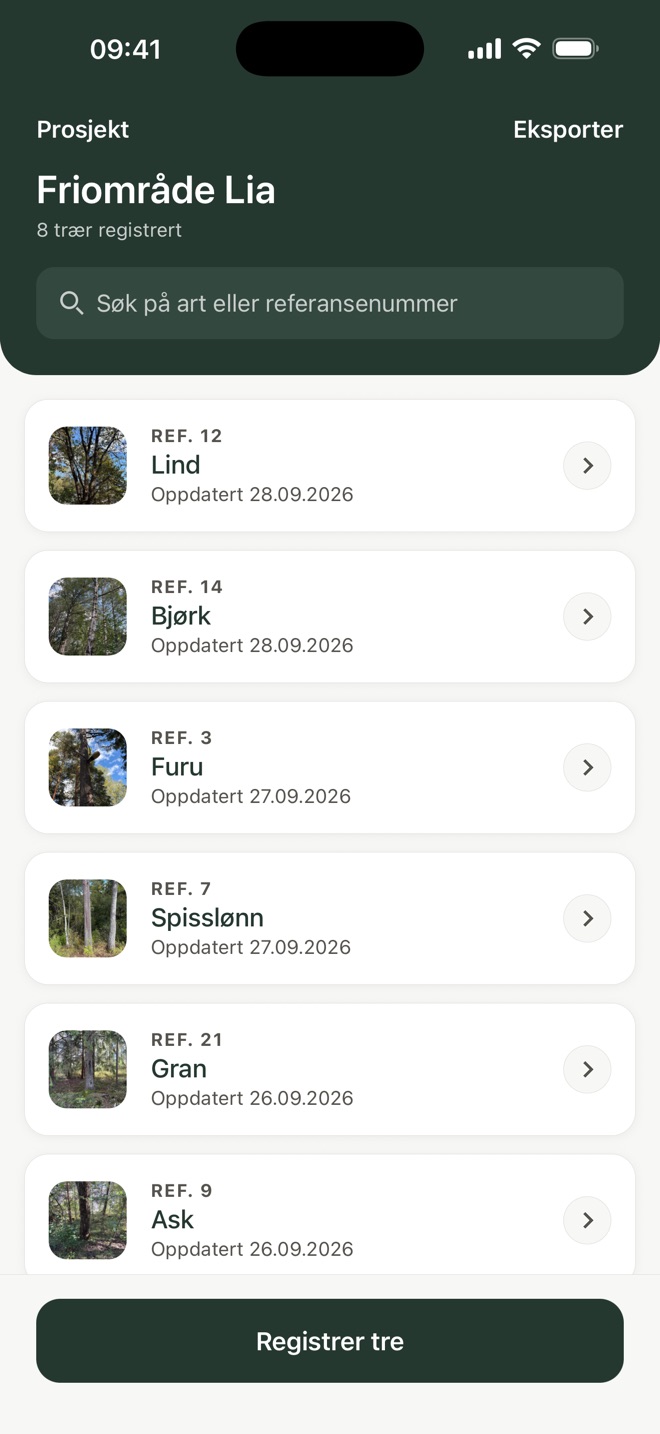
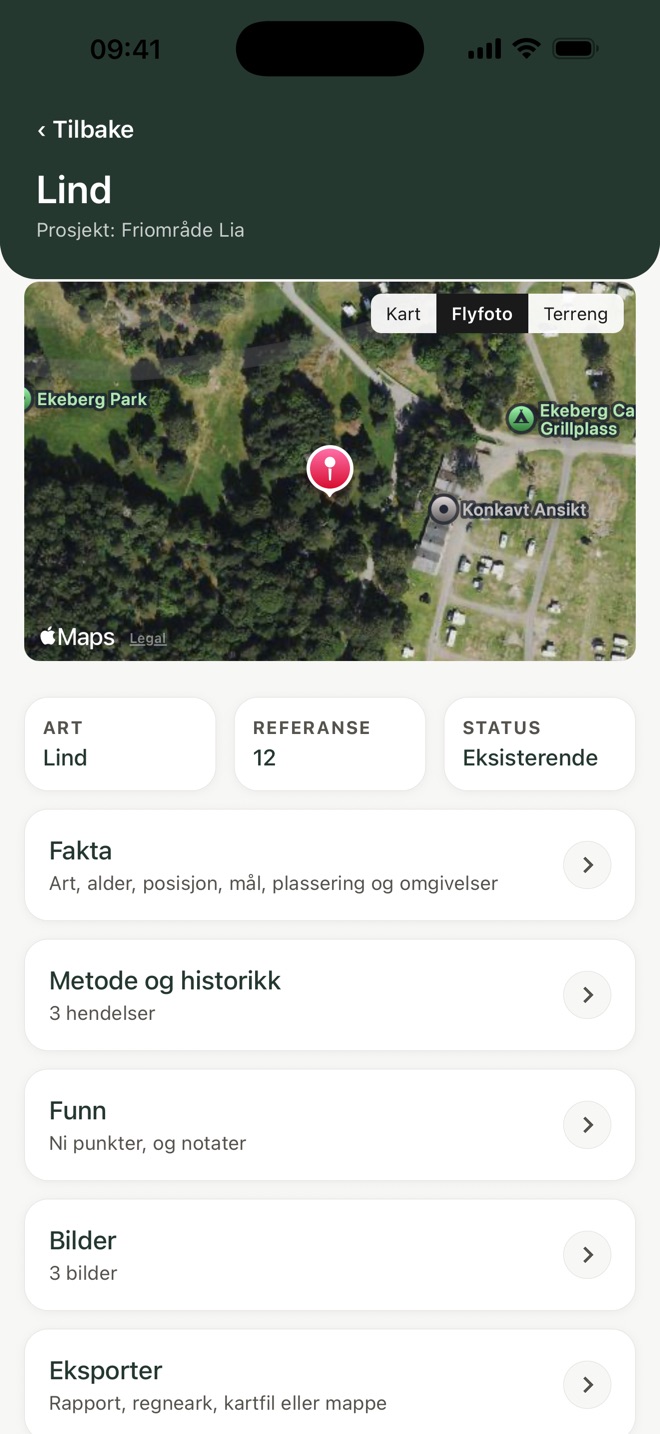
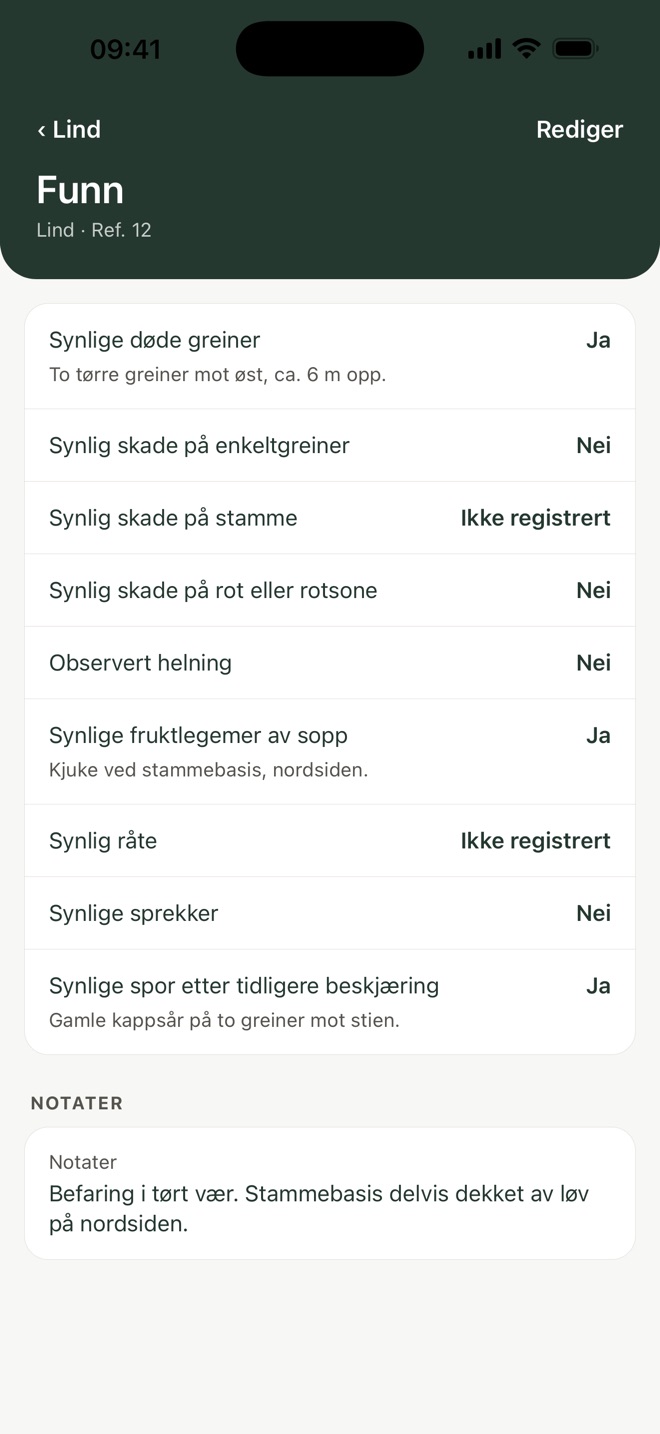
Tap a screenshot to see it full size.
Export other people can use
The formats are chosen because they open somewhere other than in the app, and because each does its own job. PDF and the Word package are produced per tree — that is the documentation for a single object, ready to send on or drop into another document. The whole register, or one project, comes out as an Excel file with one row per tree: it opens in columns whatever the computer's settings, numbers stay numbers, and a reference such as 007 stays 007. The same rows come as CSV for other systems.
GeoJSON field names follow the app's language and stay the same from one export to the next, so a map project built on them keeps working in QGIS, ArcGIS and anything else that reads geodata.
The app speaks Norwegian and English. Choose at the foot of the tree list; the exports follow the language you choose.
The backup is a .zip holding every row, photo and attachment in one file. It can be imported again, and import only adds — what is already there is left untouched.
The app judges nothing
Everything in Trejournal comes from you. It does not suggest a species, assign a condition rating or draw conclusions about what you have recorded. It does not replace professional judgement, inspection or responsibility.
That is deliberate. Documentation is worth something because a qualified person stands behind it. The app's job is to remove the typing, not the judgement.
Your data stays on your device
Trejournal has no account, no sign-in and no analytics. Records are stored in a database on your iPhone or iPad, and photos as files in the app's own storage area. Nothing is sent to the publisher or to any third party.
The only thing the app fetches over the network is the map background. That sends a request for a map tile and an IP address — no records, photos or positions travel with it. The privacy policy goes through this in detail.
Support
Questions, bugs or feature requests: email support@byggjournal.com. The developer answers. Common questions are answered first, if you want the answer straight away.